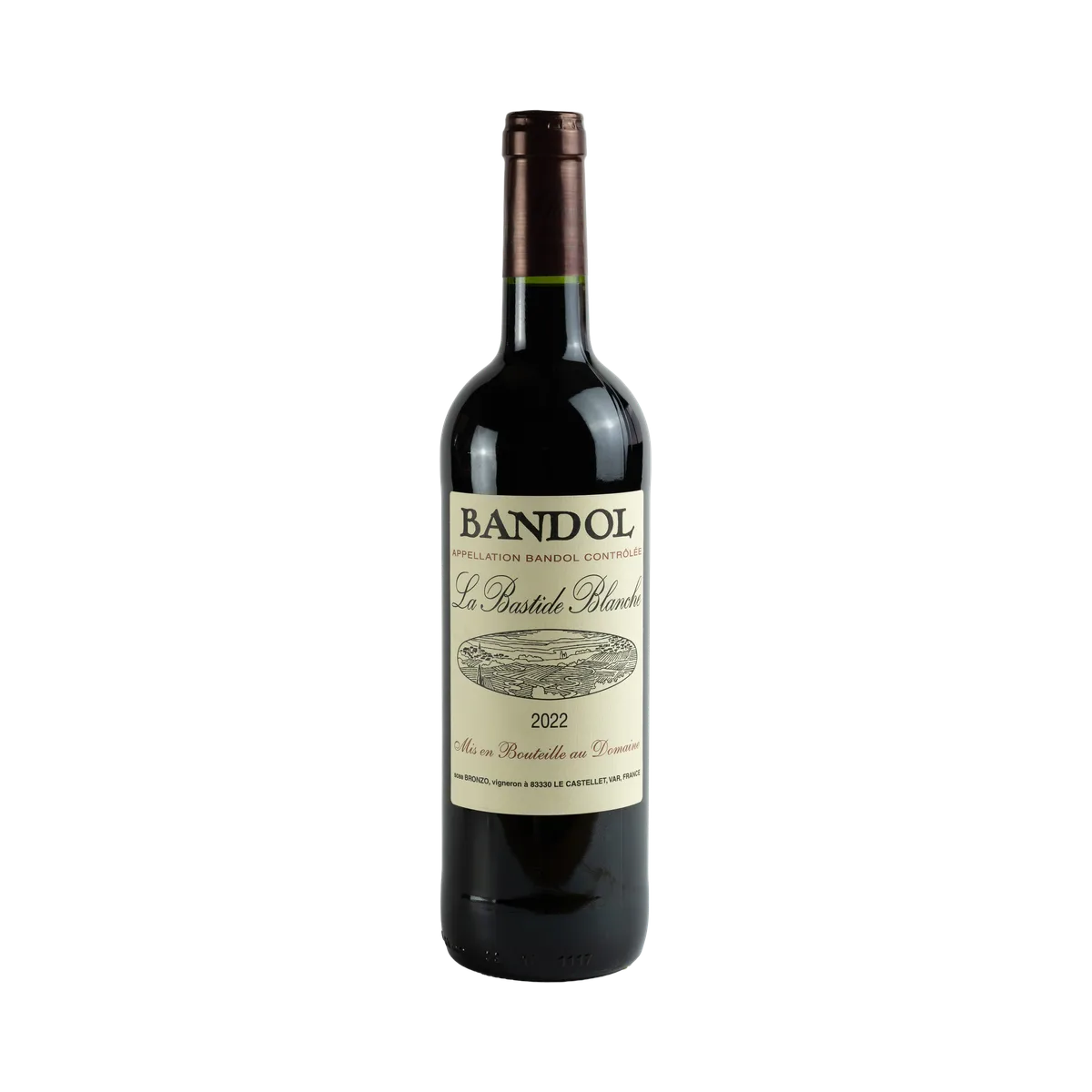
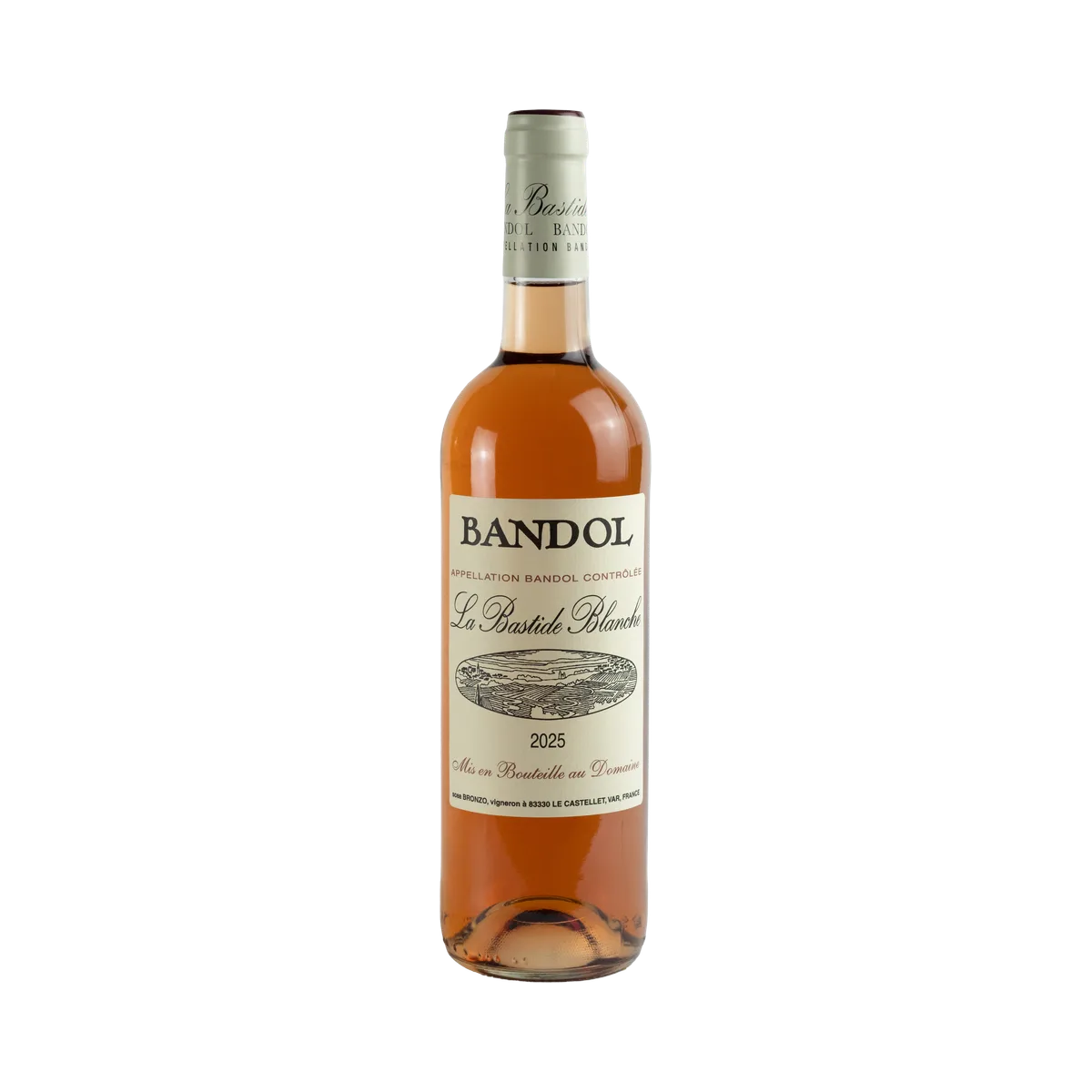
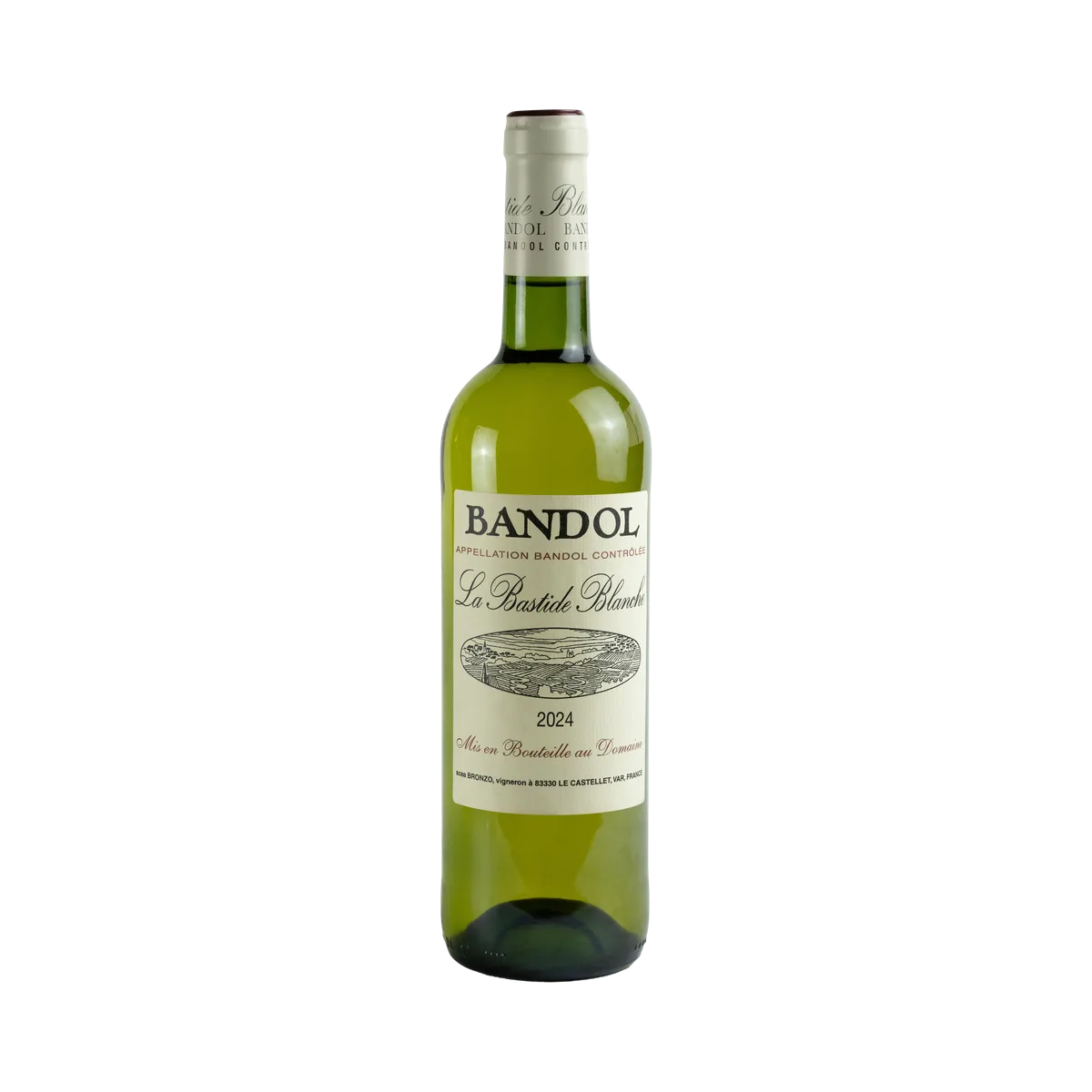
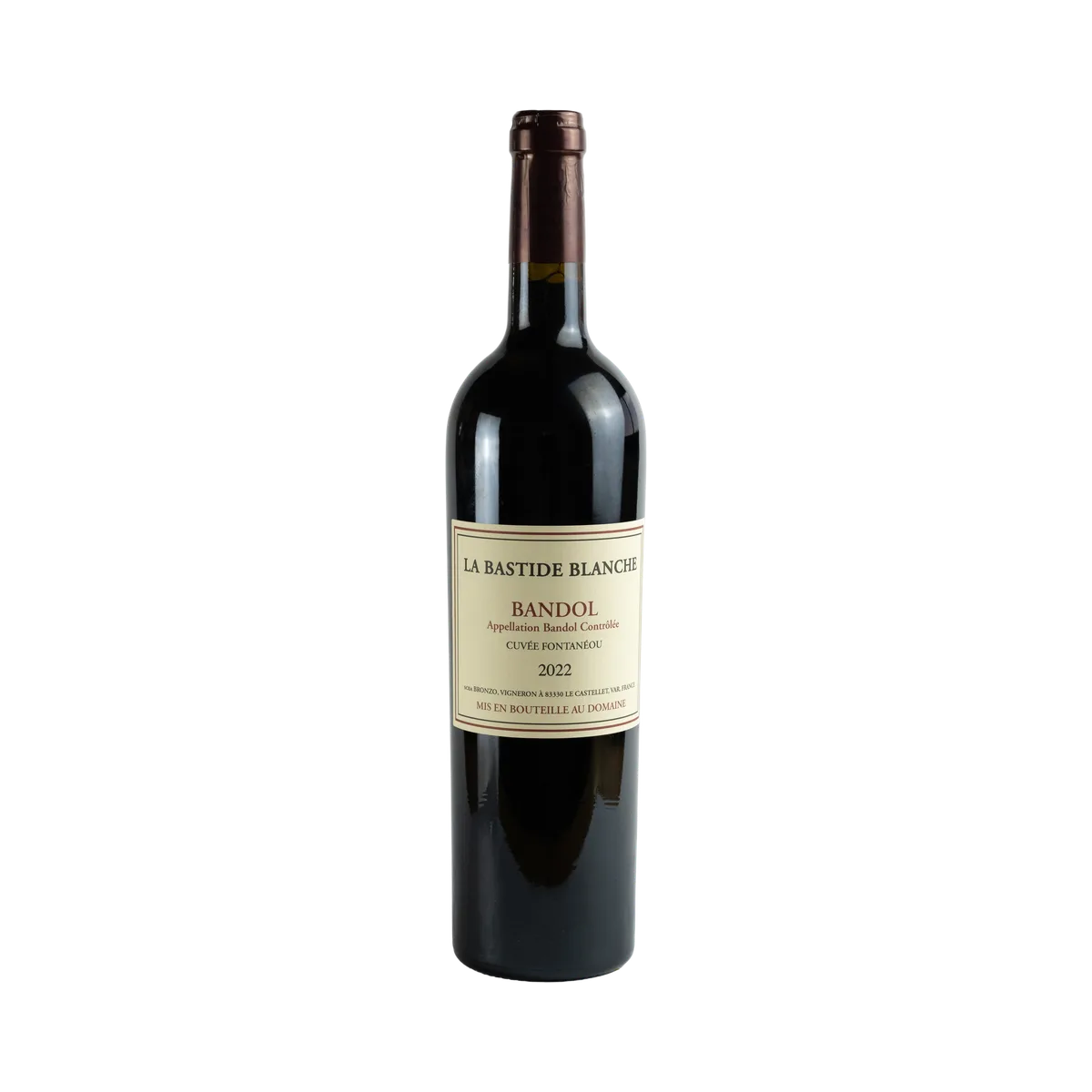
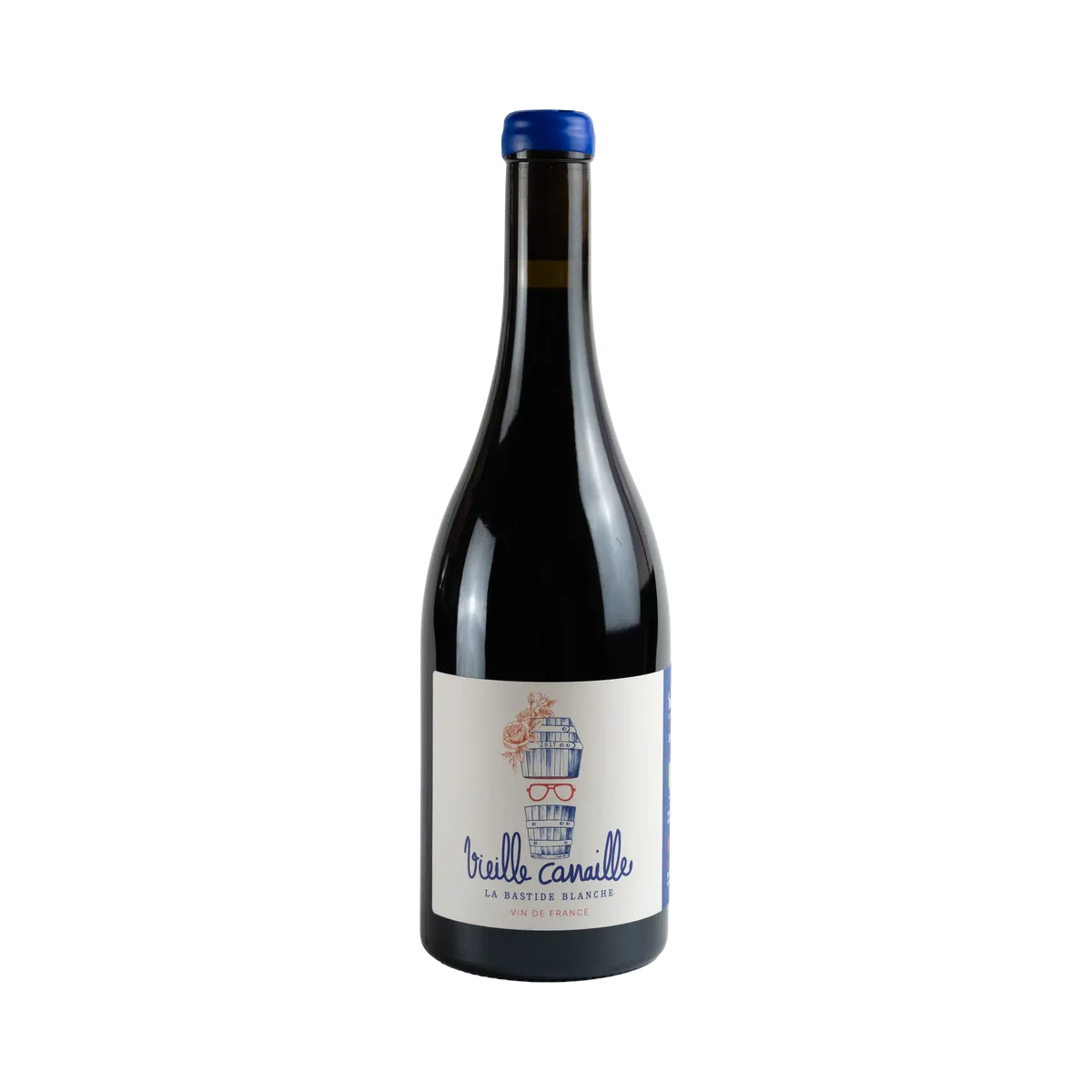
Red
Controlled Designation of Origin
Bandol
A great terroir of Provence · AOC-classified since 1941
- AOC 1941
- Mourvèdre
- 1941
- AOC classification
- 1,600 ha
- Vineyard
- 8 communes
- Production area
- 18 months
- Minimum red ageing
« Mourvèdre, the appellation's signature grape, shapes age-worthy reds and gastronomic rosés. »
Recognised in 1941, Bandol is one of the oldest appellations in Provence. Spread across eight communes, its production zone forms a vast natural amphitheatre, bounded to the north by hillside landscapes and open to the south towards the Mediterranean.
A well-defined terroir
An amphitheatre facing the sea
The Bandol appellation covers the communes of Bandol, Sanary-sur-Mer, Le Castellet, La Cadière d'Azur, Saint-Cyr-sur-Mer, Évenos, Ollioules and Le Beausset. The 1,600-hectare vineyard is planted on hillsides, often arranged in dry-stone terraces (restanques).
The Mediterranean climate, protective hills, poor and deep soils, the Mistral, the sea breeze and 3,000 hours of sunshine per year create unique conditions for Mourvèdre to reach full maturity.
« The soil of Bandol is very dry and stony. The principal production of the terroir is red wine of the first quality. »
- Clay-limestone
- Dominant soil
- 3,000 hours
- Annual sunshine
- 650 mm / year
- Rainfall
- Mistral & sea breeze
- Natural regulation
The signature grape
Mourvèdre,
the emblematic grape of Bandol
Growers say it needs to see the sea to reach perfect ripeness. A late-ripening variety, its perfect maturation requires heat, sunshine and the gentle maritime influence.
Mourvèdre gives the red wines structure, tannin and ageing potential, while lending the rosés their distinctive character, grip and complexity.
« … Mourvèdre forms the base of these wines, which are full-bodied and of the finest colour … »
- Late September – early October
- Late ripening
- 10 to 30 years
- Red ageing potential
- 50 to 95 %
- Mourvèdre in reds
- 20 to 95 %
- Mourvèdre in rosés
The specifications
An appellation with rigorous production rules
-
Hand-harvesting
The harvest must be done by hand. This rare requirement ensures a rigorous selection of the grapes. The grape clusters are transported whole to the winery. At La Bastide Blanche, we use 250-kg crates that are never stacked, and filling them allows for additional sorting. -
Minimum 18-month ageing
Red wines are aged for at least 18 months in barrels or large oak casks (foudres) and are not released for sale until May 1 of the second year following the harvest. The most common type of wooden aging vessel used in the appellation is the large oak cask. -
Minimum Planting Density and Limited Yield
The minimum planting density, set at 5,000 vines per hectare, promotes deep root growth and competition among the vines, ensuring high-quality grapes. With a yield limited to 40 hectoliters per hectare - among the lowest in France - no more than one bottle of wine is produced per vine. -
Young vines entering production
The Appellation d’Origine Contrôlée (AOC) designation cannot be granted to rosé and white wines produced from young vines less than three years old, or to red wines produced from vines younger than eight years. At La Bastide Blanche, this rule applies following a voluntary five-year fallow period, which results in ten years without a harvest after a plot has been uprooted. -
Regulated grape varieties
The proportion of Mourvèdre must be between 50 and 95% for red wines and between 20 and 95% for rosé wines. For white wines, the Clairette variety must account for between 50 and 95% of the blend. -
Controlled release dates
Rosé and white wines are released for sale starting March 1 of the year following the harvest; red wines are released on May 1 of the second year. All wines undergo an internal quality tasting beforehand to determine whether they qualify for the Bandol Appellation d’Origine Contrôlée (AOC).
Production
Wines produced in all three colours
Rosé
Gastronomic rosé
White
Complex aromatic
An acclaimed appellation
Wines appreciated the world over.
Structured and complex, suited to gastronomy and cellaring, Bandol wines have long been appreciated well beyond our borders: « more than 6,000 hectolitres of wine passed through the port of Bandol bound for Italy, northern Europe and America » (1818, deliberation of the Municipal Council of Bandol).
« plus de 6.000 hectolitres de vin ont transité par le port de Bandol à destination de l'Italie, du nord de l'Europe et de l'Amérique »